There’s no doubt that the remarkable adventures of Jho Low will earn him a spot in literary history alongside Ulysses. However, only a fool would believe that the cyclops and sirens from the “Odyssey” are real creatures or that there is no more to Jho Low’s story than only what we’ve been told.
The mainstream media has presented us with a remarkable manufactured cover story.
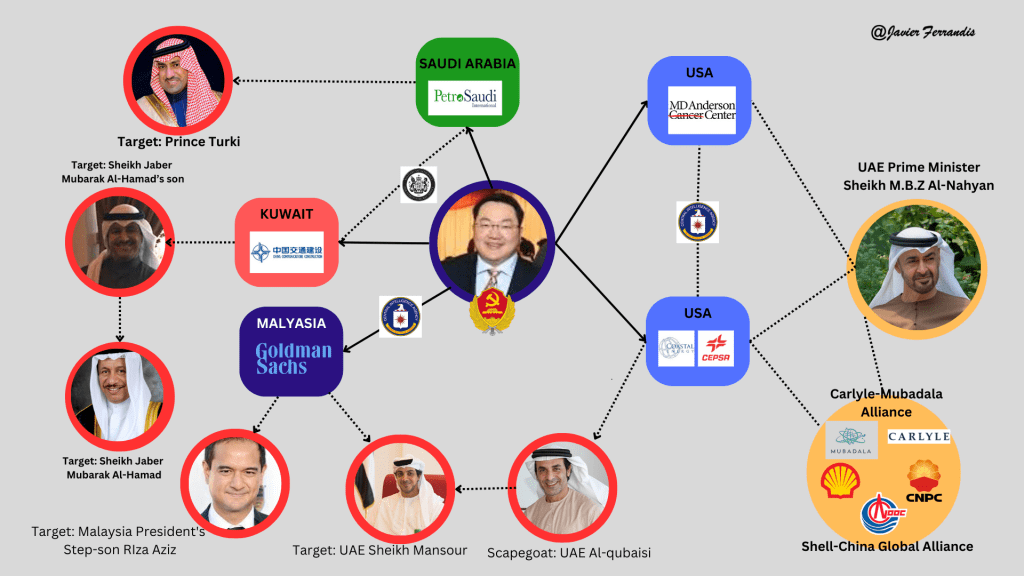
“A 28-year-old Malaysian businessman of Chinese descent, whose grandfather amassed wealth through liquor distilleries and real estate in Thailand and Hong Kong in the 1960s and 1970s, orchestrated one of the largest frauds in history, diverting $4.5 to $7 billion from the Malaysian Sovereign Wealth Fund into his personal accounts. Over 4 years, this “Mastermind” managed to deceive half of the planet and funneled some of this money to his co-conspirators in various business ventures around the world, including the son of the King of Saudi Arabia, the brother of the President of the UAE, the son of the Prime Minister of Kuwait, and the step-son of the President of Malaysia. For the past 7 years, this fugitive has been hiding somewhere in China, apparently under the protection of the Chinese government. If that was not enough, he managed to do something no other criminal had achieved before; he signed a deal in absentia with the US Department of Justice, which would allow him to remain free by returning only a fraction of the money that disappeared without accepting any guilt in the scandal.”
In 2018, Goldman Sachs agreed to pay $6.8 billion in two almost consecutive settlements due to its involvement in issuing fraudulent bonds linked to the 1MDB scandal. This included a $3.9 billion settlement with the Department of Justice (DOJ) and a separate $2.9 billion settlement with the government of Malaysia [1]. This remains the largest fine ever paid by the investment bank in its 150-year history [2]. The U.S. DOJ’s Attorney General and the FBI’s Deputy Director described the 1MDB scandal as the most significant case of kleptocracy in history [3]. Currently, there are ongoing cases in five different jurisdictions related to various aspects of the 1MDB scandal: Switzerland [4], Malaysia [5], the USA [6], Singapore [7], and the UK [2].
The distance from the events— which occurred between 2010 and 2016—provides a broader perspective, illuminating the 1MDB scandal as more than just a simple case of kleptocracy. In several previous articles [8-11], this author has pointed out that the 1MDB scandal is not a real kleptocracy case but a sophisticated intelligence operation, the fruit of the collaboration mainly of the intelligence services of the USA, China, and the UK but also of other players such as the intelligence services of the UAE, Saudi Arabia, Malaysia, Spain, Turkey, and Thailand [8]. From an economic point of view, the primary goal of the operation was the transfer of very sizable long-term Oil & Gas concessions in the United Arab Emirates from major Western corporations, Shell and Exxon, to the two largest Chinese NOCs: CNOOC and CNPC [8]. Immediately after, CNOOC and CNPC signed two strategic alliance agreements with Shell Oil in Beijing and London. This fits within a longer ongoing process, which is the incorporation of China into an “extended” US-led petrodollar system.
Keeping this in mind, from the economic side, the so-called scandal is a convoluted but obvious financial engineering operation geared towards delivering a huge commission, a bribe, to the Emirati royal family and associates that agreed to and facilitated the operation. The Purchase of Oscar Wyatt’s Coastal by Emirati-owned CEPSA allowed the transfer of wealth through the manipulation of the value of Coastal and the later overvalued purchase of part of CEPSA by the Carlyle Group [9-10]. The CEPSA-Coastal purchase was also a means to pay the Chinese government avatar, i.e., Jho Low, and the many US-based collaborators that participated in the operation. This author has also explained that the M.D. Anderson Cancer Center collaboration provided a cover for the presence of Jho Low in Houston [11], allowed the payment of a kickback to PwC for the design of the financial structure of the operation, and allowed the channeling of funds to IBM for the development of concealed social media communication tools still in use today by all the participants in the operation [11].
This article will explain some of the specific political objectives related to the 1MDB “scandal.” Decades ago, it was understood that creating a US-led extended petrodollar system that included China would necessitate a significant transformation of the Middle East. It was anticipated that this would involve transferring large oil and gas concessions in the Arabian Peninsula to Chinese National Oil Companies (NOCs). Additionally, it was expected that increased reliance on Arabian oil and gas would lead to polarization and direct confrontation with Iran, particularly because Iranian and Iraqi oil output would need to be suppressed for the extended petrodollar system to function effectively.
This would require that individuals in powerful positions within the various Saudi royal families are fully aligned with this agenda. Therefore, it was necessary to neutralize those branches within the Arabian royal houses who were viewed as less cooperative, while supporting those deemed more friendly and receptive to the numerous changes transforming the region. These two articles will examine how the different phases of the 1MDB Operation were designed to damage the reputations of their targets and undermine them politically.
The Saudi-Arabia Phase
To grasp the lengths to which the intelligence services of the US, China, the UK, and the other countries mentioned above went in designing such a complex and long-lasting intelligence operation like the 1MDB operation, it’s essential to first understand the challenges posed by the agnatic seniority succession system of the Saudi crown. This system is particularly challenging for these intelligence services due to its instability and unpredictability.
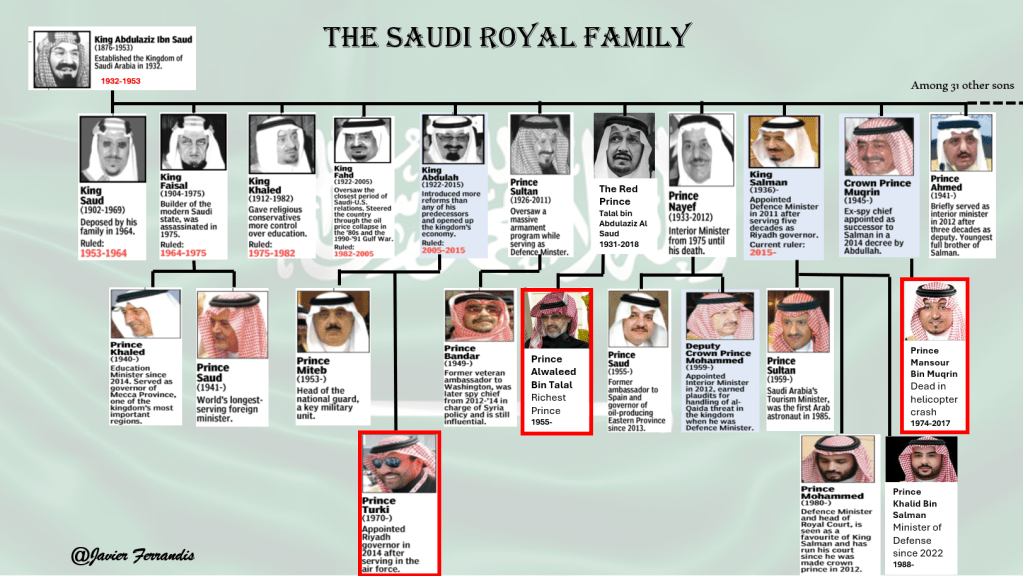
In Saudi Arabia’s succession system, the next oldest brother typically becomes the Crown Prince and eventually the King. Power is usually passed from one brother to the next, rather than following the more common monarchic practice of transferring authority from father to son. Therefore, when a king dies, the next surviving brother is expected to become the Crown Prince and eventually ascend to the throne. Traditionally, the King has had considerable authority to appoint the Crown Prince. However, since 2006, there has been a more formalized process involving the Allegiance Council, which was established by King Abdullah to regulate succession. This Council is composed of representatives from various branches of the Al Saud family and was created to ensure a smooth and stable transition of power. While the Council has the authority to endorse or, in theory, reject the King’s choice of Crown Prince, the King still retains significant influence over the decision.
Since the founding of modern Saudi Arabia by its first monarch, King Abdulaziz Ibn Saud, all subsequent kings have been his sons. King Abdulaziz had many sons, and after his death in 1953, the throne passed among them, with each brother succeeding the previous king. The surviving sons, including the current king since the death of King Abdullah in 2015, King Salman, are now very old, and many of the surviving grandsons are also advanced in age.
Prince Muqrin bin Abdulaziz Al-Saud was appointed Crown Prince by King Abdullah in 2013. However, he was quickly replaced a few months after King Salman ascended to the throne, marking a significant shift in the dynamics of Saudi succession. Prince Mohammed bin Nayef Al-Saud, who served as Minister of Interior, became the first grandson of King Saud to be named Crown Prince since the founding of Saudi Arabia. In 2015, another surviving son of King Saud, Prince Miteb bin Abdullah, who was the Minister of the National Guard, was considered a potential candidate for the position due to his influential role. Although Prince Turki bin Faisal Al-Saud was a prominent figure in diplomatic and intelligence circles, he was not included in discussions about potential Crown Princes in 2015. This was largely due to his age and the focus on candidates who were more directly involved in the political and security matters of Saudi Arabia at that time.
Other younger grandsons of King Saud were significant figures in Saudi Arabian politics at that time. Prince Turki bin Abdullah Al Saud stood out, particularly as the Governor of Riyadh. Another grandson, Prince Al-Waleed bin Talal, was not viewed as a potential candidate for Crown Prince due to his minimal involvement in state affairs. Prince Al-Waleed bin Talal gained international recognition as the wealthiest of all Saudi princes because of his business success.
Jho Low and the PetroSaudi – Khashoggi connection
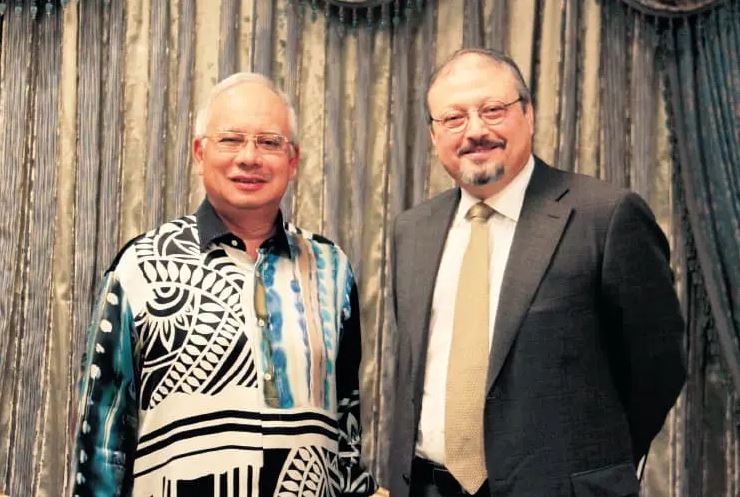
In September 2010, the Malaysian 1MDB fund poured US$1 billion into a joint venture with PSI (Petro Saudi International). Petro Saudi Int. Valuation at the time was based on a Caspian Sea concession, whose value PetroSaudi had vastly intentionally inflated. Three months later, Jho Low and Tarek Obaid (shareholders of PSI) arranged an interview between journalist Jamal Khashoggi and Malaysian President Najib Razak. Ten days before that interview, on December 2nd, 2009, Tarek Obaid instructed for US$100,000 to be transferred to Jamal Khashoggi. Before the interview, Jho Low provided Khashoggi with a list of 16 questions that Khashoggi would ask Najib. The questions touched on the topics of Malaysia’s importance to the Muslim world, the “centrality of Saudi Arabia and a new ‘beginning’ to a Saudi-Malaysian ‘strategic’ relationship, global themes shared by the two countries, Najib’s personal message to the Saudis ahead of Najib’s January 2010 visit to Saudi Arabia, according to the email published by The Edge. During the visit, Najib Razak met the late King Abdullah and was awarded Saudi Arabia’s highest civilian honor — the King Abdulaziz Order of Merit [12-13].
By then, “journalist” Jamal Khashoggi had worked most of his life as a Saudi Arabian intelligence operative pretending to be a journalist. We have been told that Khashoggi had a change of heart and apparently, at the age of 60 years, suddenly became a fierce critic of the Saudi State and of the Saudi Crown Prince Mohammed bin Salman in particular. According to the C.I.A. (a well-known American Fact-checking non-profit organization), Khashoggi was murdered at the Saudi consulate in Turkey on October 2nd, 2018. We are supposed to believe that the “Khashoggi Killing” had roots in a cutthroat Saudi Royal family feud”, that had the 1MDB dealings of Prince Turki and Tarek Obaid (who has been hiding in Switzerland ever since) as a central part of this feud [14].
Target “Prince Turki”: How Jho-Low’s PetroSaudi Scandal Fueled MBS Purge
Tarek Obaid and the late Saudi ruler King Abdullah’s son, Prince Turki Abdullah, were shareholders of Petro Saudi Int. The 1MDB fund lost US$1.8 billion in its dealings with Petro Saudi Int, and much of this sum was allegedly traced back to the bank accounts of Jho Low, Tarek Obaid, Prince Turki, and PSI director Patrick Mahony. The Prince received $77 million as his ‘commission’ of the 1.83 billion dollar business dealings with 1MDB.
Tarek Obaid sent Prince Turki a forged document showing equal payments for Prince Turki and himself before the ‘escrow account’ was closed. The payments registered for Prince Turki are correct and match the transactions registered by the bank, but there were no matching payments for Tarek Obaid. Prince Turki may not have been aware that Najib Razak’s proxies, Jho Low and Tarek Obaid, snatched the bulk of that money into their own accounts [15].
After the death of King Abdullah, Prince Turki Abdullah was caught in a Saudi Royal household struggle with Crown Prince Mohamed Bin Salman (MBS). Prince Turki extricated himself from PetroSaudi soon after the 1MDB scandal broke, and even though it was a Riyadh company and Saudi Associates that received the payments from Petro-Saudi, the US Department of Justice’s (DOJ) original court filings in 2016, which detailed how $24.5 million had been passed from Jho Low’s company Good Star in 2011 to a “Saudi Prince.”
Unfortunately, the damage was done. The standing of Prince Turki Abdullah had taken a deadly blow because of this connection with the 1MDB scandal. Prince Turki was sacked as Riyadh governor via a royal decree in January 2015, the day after King Abdullah died.
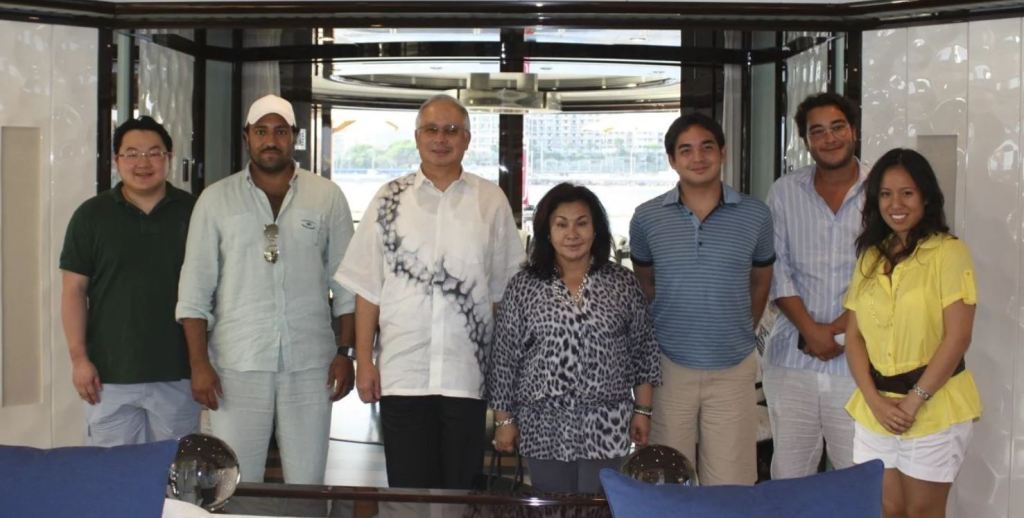
We can see clearly a year later, with the broader perspective, that the Petro-Saudi fiasco was a maquiavelic intelligence operation used to frame and delegitimize Prince Turki as a potential successor to the Saudi throne. Jho Low had fabricated non-existent Prince Turki’s connections to give the impression to the 1MDB Fund that the Petro-Saudi Int joint venture was linked with State-to-State relations, implying that he was acting on behalf of the Prime Minister of Malaysia and the father of the Saudi Prince, King Abdullah.
In 2014, British newspapers revealed the presence of UK ex-PM Tony Blair as an advisor to Petro-Saudi through a secret contract signed in November 2010 between Tony Blair Associates (TBA) and PetroSaudi [16]. The British newspapers gave a particular spin to the story aimed at damaging Prince Turki’s reputation. The Daily Mail emphasized that Tony Blair had signed a secret contract with a firm founded and run by King Abdullah’s son, Prince Turki. In fact, the company was run by Tarek Obaid, and Prince Turki was simply a silent partner.
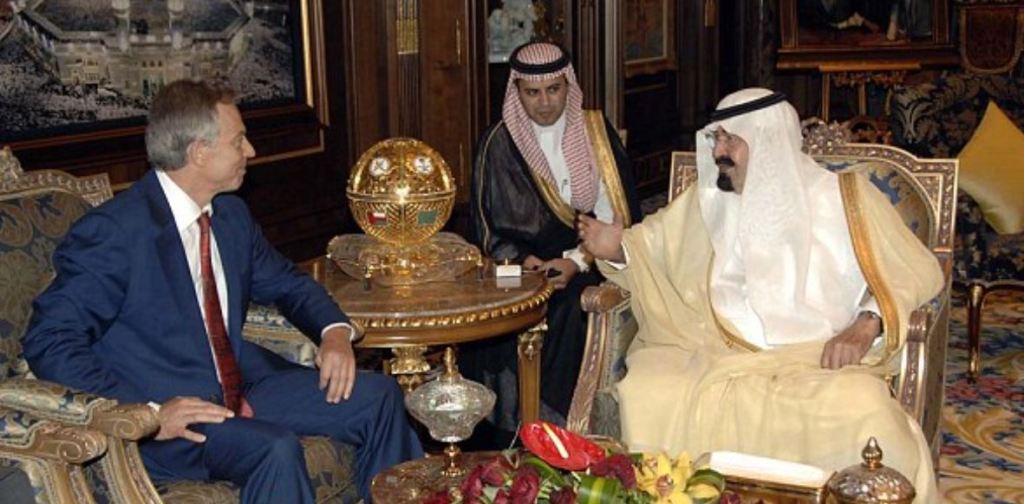
In November 2017, Prince Turki was among about 200 princes and business leaders aligned with the late king who were rounded up and arrested under orders from MBS, being forced to hand over a big part of their assets. [17-21].
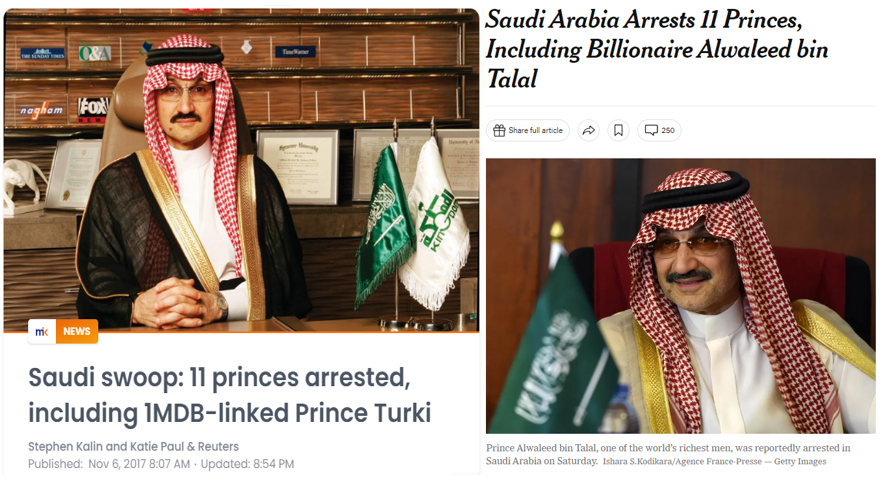
The original goal of the Petro-Saudi intelligence operation was successfully achieved. Prince Turki’s involvement in the 1MDB scandal, along with his indirect mention in court filings by the U.S. Department of Justice, eliminated any chances of him being considered a potential candidate for the Saudi throne. This also ignited public outrage against government corruption, aiding Prince bin Salman in justifying the 2017 purge.
Notably, Prince Al Waleed bin Talal al Saud, the most internationally recognized Saudi prince, was adversely affected, despite having no ties to the 1MDB operation. His reputation suffered, with some publications even featuring his picture in articles related to 1MDB, despite his lack of connection to the case.
This illustrates how crucial the 1MDB operation was for justifying the 2017 purge. It ultimately helped to consolidate power within the Al-Salman lineage of the royal family and neutralize other branches.
SUMMARY
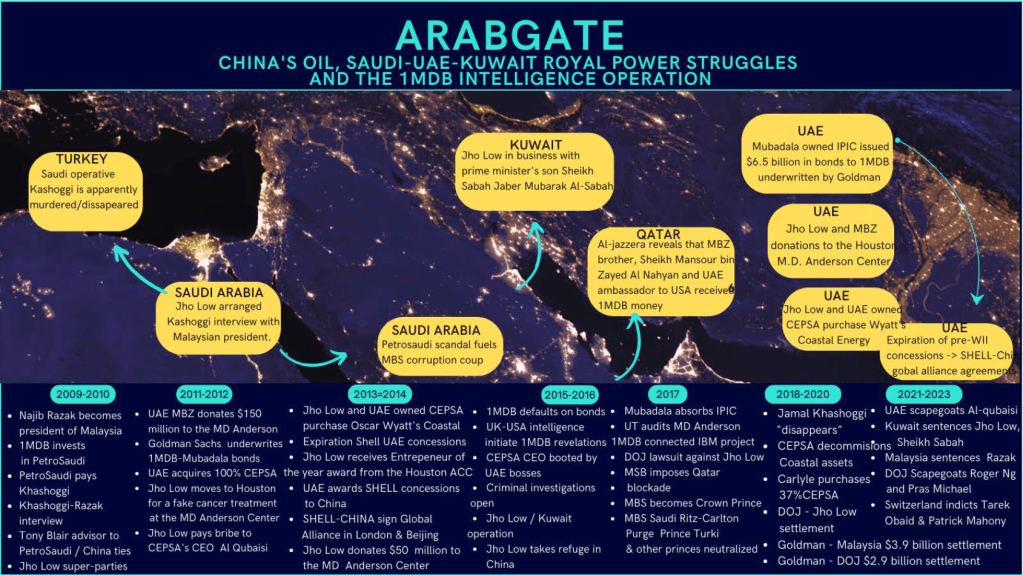
This article explores the covert operations carried out by intelligence agencies from the UK, China, the US, Kuwait, and Saudi Arabia, focusing on their joint efforts to influence the delicate lines of royal succession in both Kuwait and Saudi Arabia. Through a series of secretive maneuvers, these nations sought to advance their geopolitical interests. The intelligence services implemented a sophisticated plan that involved the illegal entrapment of prominent figures within the royal families of both countries. This complex strategy included orchestrating scenarios designed to compromise these individuals. As a result, potential candidates became embroiled in scandals, prompting public outrage against corruption within the Royal Family. This outrage fueled a widespread purge welcomed by the public and reshuffling within the royal ranks in 2017 and beyond. The consequences of these actions were significant, leading to power consolidation and shifting power dynamics in the region.
References
[2] Goldman Sach sues Malaysia over 1MDB settlement (Reuters, 10/11/2023)
[3] U.S. Seeks to Recover $1 Billion in Largest Kleptocracy Case to Date ( 07/20/2016 FBI News)
[4] Swiss Court convicts executives over $1.8 billion 1MDB scandal (Reuters, 08/24/2024)
[5] Malaysia halves ex-PM Najib Razak’s jail term over 1MDB scandal (BBC, 02/02/2024)
[6] US to recover Monet, Warhol, from fugitive financier Jho Low over 1MDB scandal (6/26/2024)
[7] Singapore refuses to give up pursuit of Jho Low, unfazed by US deal (SCMP 07/17/2014)
[8] The Carlyle Mubadala Alliance: A new Blueprint for Oil & Gas Bribery (KickBack News 10/07/2021)
[9] The Reserves Fraud Case at the center of the 1MDB operation ( Kickback News 07/21/2021)
[10] Anatomy of a kickback: PwC complicity in the 1MDB operation ( KickBack News 07/21/2021)
[12] Reports link slain journalist Khashoggi to 1MDB conspirators (MalayMail, Dec 1st 2018)
[13] The 1MDB conspirators and the Khashoggi connection (The Edge Malaysia, Dec 3rd 2018)
[15] Did Tarek cheat his prince ? (Sarawak Report, Feb 22nd 2017)
[17] PetroSaudi’s Prince Turki is rounded up on corruptions charges (Sarawak Report, Nov 5th 2017)
[19] What just happened in Saudi Arabia ? The Weekend Purge explained (NewsWeek, Nov 8th 2017)
[20] 2017-2019 Saudi Arabian Purge (Wikipedia)
Make a one-time donation
Make a monthly donation
Make a yearly donation
Choose an amount
Or enter a custom amount
Your contribution is appreciated.
Your contribution is appreciated.
Your contribution is appreciated.
DonateDonate monthlyDonate yearlyCategories: State & Corporate Crime
 KICKBACK NEWS